
The short version
- Material compatibility comes first: choose a factory color or paint system suited to the exact siding product.
- Wall condition matters next: paint changes color but does not repair cracked panels or address water behind siding.
- House proportions guide the palette: compare siding, roof and trim together on a ranch, bungalow or two-story home.
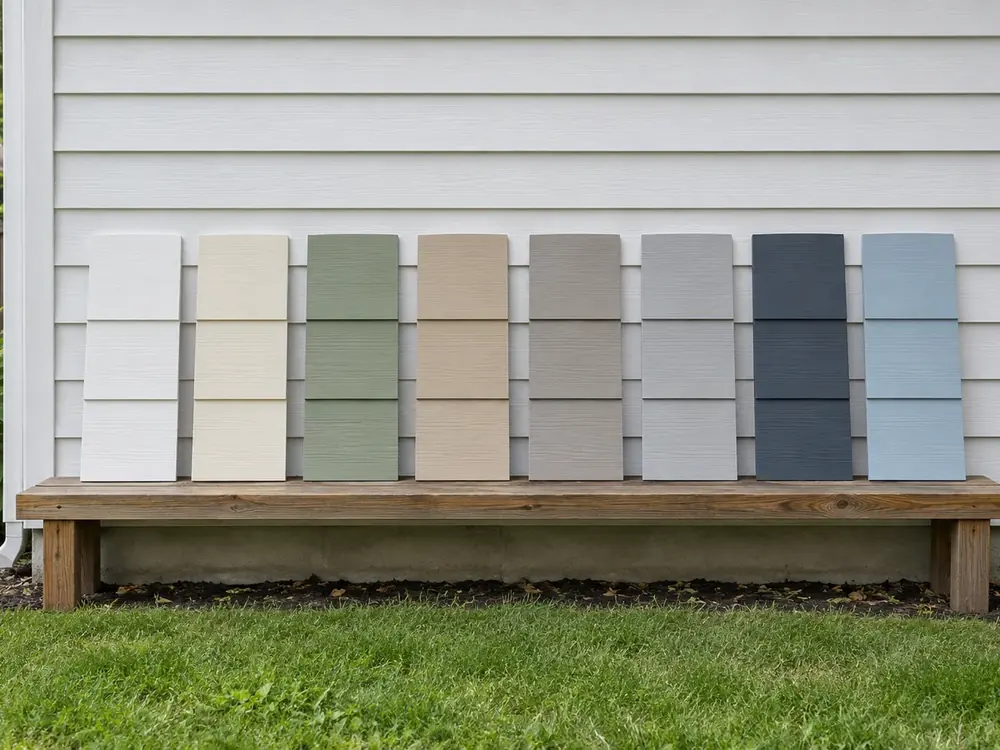
Color and Finish Choices by House Type
Ranch Walls and Factory Vinyl Colors
Long ranch walls make the main siding color a large part of the exterior. Compare different colors of vinyl siding beside the roof, brick and foundation that will stay. A soft gray beside warm brick may read differently from the same sample against white trim. The best vinyl siding colors for your home are the compatible options that suit those fixed surfaces.
Dark factory colors need panels designed for their heat exposure. Ply Gem explains that darker siding absorbs more heat and that product design matters. A deep blue panel and a light panel painted blue aren't interchangeable choices. Call with the shade you like; your siding pro checks the product rather than selecting by color alone.
Two-Story Homes and Repainting Limits
Paint can refresh a sound two-story wall, but it cannot straighten warped siding or fix the wall behind it. Include high gables, corner posts and window trim when discussing siding repair and painting. Ask which surfaces need repair and how access to the upper walls affects the work.
Sherwin-Williams lists specific paint products and a limited selection of darker colors for sound vinyl. Your siding pro should compare the siding manufacturer's instructions with the coating instructions before work starts. A color name alone doesn't establish compatibility.
Bungalow Trim and Painted Boards
Bungalows benefit from considering porch trim, dormers and the main wall as one palette. Keep the number of accent colors manageable so small trim details don't compete with the siding. Call about the parts you want to emphasize, including shingles or a porch gable.
Fiber cement siding colors come from factory finishes or paint applied to a suitable product. Searches for Hardie board siding colors refer to fiber cement; James Hardie describes primed boards and factory-applied finishes. Engineered wood needs its own finishing instructions: LP describes acrylic latex coatings intended for wood composites. Real Cedar discusses paint and stain choices for cedar siding. A stained-wood look isn't the same finish choice for every wood-like board.
| Material | Finish choices | Repaint need |
|---|---|---|
| Vinyl | Factory color; compatible paint where permitted by product instructions | Factory-colored panels don't need paint to establish their color |
| Fiber cement | Primed for painting or factory-finished | Primed boards need a finish; later repainting follows product instructions |
| Engineered wood | Product-specific painted finish | Maintain the coating according to the product instructions |
| Cedar wood | Paint or a suitable stain | Renew the chosen finish as its condition requires |
Older Frame Homes and Existing Layers
Existing paint and siding need identification before surface work begins. EPA says homes built before 1978 are more likely to contain lead-based paint, and Illinois EPA identifies siding among materials that may contain asbestos. Leave old layers undisturbed and call. EPA advises against touching suspected asbestos material.
For a historic property, include its designation in the conversation. Glen Ellyn's preservation guidance favors retaining original materials where possible. Your siding pro can discuss the existing boards and the proposed finish without treating fresh paint as a solution for deteriorated material.
Townhouses, Condos and the Whole Exterior
Shared exteriors need a coordinated material and color decision under the association's rules. Call about a townhouse or condo and describe any exterior review your board requires. The board decides under the community's governing documents; color approval belongs before ordering materials.
For a Chicago-area home, compare samples outdoors in direct light and shade, then look from across the street where safe. Keep observations at ground level. Photos and the wall's direction help the conversation; keep children and pets away from loose pieces. One of our local siding partners explains the preparation, finish choice and price before the proposed work begins. Compare vinyl and fiber cement for the broader material decision.