
The short version
- Upkeep favors vinyl when avoiding routine repainting matters, while fiber cement suits a homeowner willing to maintain a painted finish.
- Installation differs because heavier fiber cement boards need different handling and fastening from vinyl panels that allow temperature movement.
- Appearance depends on the product profile and trim proportions, especially around bungalow porches, older frame windows and shared townhouse elevations.
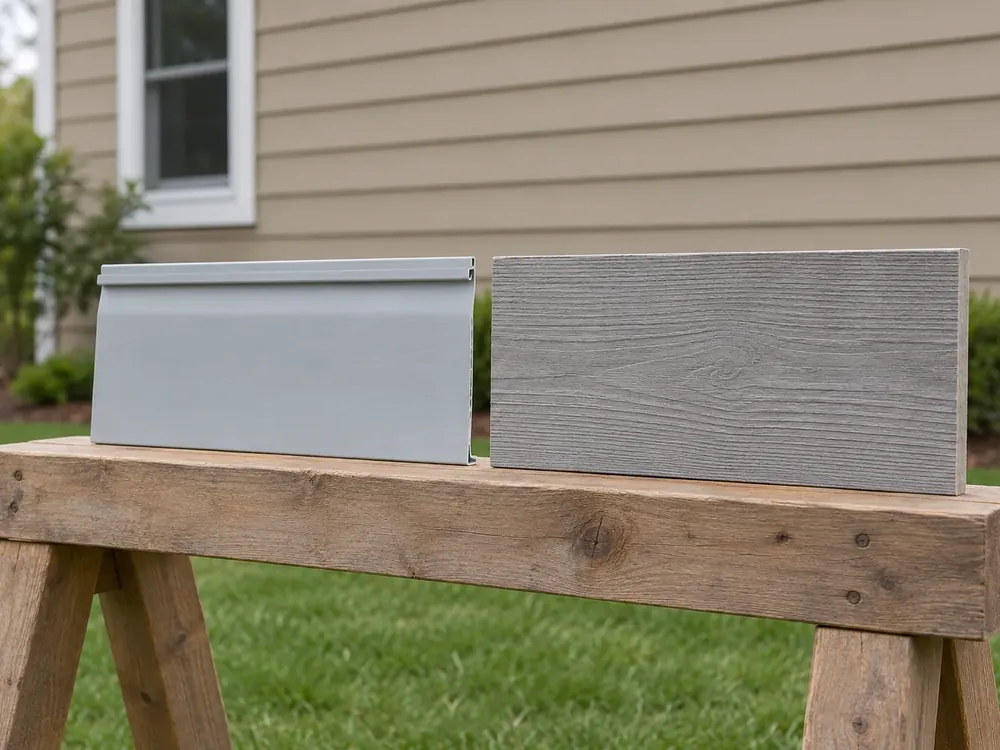
Material Choices Around the Shape of Your House
The choice between fiber cement and vinyl turns on upkeep, installation details and the appearance each product gives your house. A broad ranch wall, a bungalow porch and a shared condo elevation each need a different comparison. Call to discuss the parts of your Glen Ellyn home that matter most.
Ranch Walls Through Cold and Heat
A ranch needs siding that accommodates temperature changes across long walls. NWS Chicago's climate normals show freezing winter conditions and warm summers. Freeze-thaw performance depends on the selected product, moisture control and correct installation.
Vinyl accommodates expansion and contraction through its fastening and trim details. Fiber cement needs the specified fasteners, joint treatment and clearances. James Hardie's climate discussion describes cold-weather brittleness and heat distortion as vinyl concerns, and regional formulations for its fiber cement. The comparison concerns product behavior, rather than proof that either material fits every wall. Call about sun exposure and any existing waves or cracks.
Two-Story Installation and Upkeep
A two-story makes material handling and future maintenance part of the decision. Fiber cement boards are heavier than standard vinyl panels and need suitable handling and fastening. Ask your siding pro how the selected system will meet the existing wall and upper gables.
Fiber cement has a painted finish to maintain and eventually repaint. Sherwin-Williams describes fiber cement repainting as work requiring a suitable coating and prepared surface. Most vinyl doesn't need routine repainting, though cleaning and inspection remain part of upkeep. Compare access for that future work when discussing an upper wall.
| Factor | Vinyl | Fiber cement |
|---|---|---|
| Temperature movement | Panels need room to expand and contract | Follow product-specific joints and clearances |
| Finish care | Usually no routine repainting | Painted finish needs ongoing attention |
| Handling | Lighter panels | Heavier boards |
| Impact | Cracks or breaks need assessment | Chips or cracks need assessment |
| Moisture | Panels resist rot; concealed wood still needs protection | Boards resist rot; drainage and clearances still matter |
| Appearance | Lap, vertical and shake-look options | Board, panel and shingle-look options |
Bungalow Porches and Older Frame Details
For a bungalow, compare fiber cement siding vs. vinyl siding at the porch, dormers and window surrounds. Board depth, visible seams and trim width affect the finished appearance. A Hardie board siding vs. vinyl comparison should use samples beside the trim you intend to retain.
Neither material makes the wall immune to hail or a falling branch. Cracks, chips and loose sections warrant assessment. James Hardie describes its fiber cement as noncombustible while noting that applied coatings may char or suffer damage. Vinyl can soften under intense heat. A siding choice alone doesn't establish the fire performance of the complete wall.
Both materials resist rot, but neither fixes a leak behind the cladding. Call about indoor stains as well as exterior damage. On an older frame home, leave existing paint and siding undisturbed: EPA explains the lead-paint concern for pre-1978 homes, and Illinois EPA identifies older siding as a possible asbestos-containing material.
Townhouse and Condo Appearance Decisions
A townhouse or condo needs a material decision that accounts for neighboring elevations and association rules. Call now to discuss the wall, then ask the board which exterior materials and colors the association allows before ordering. Compare the samples against adjoining trim and roof colors.
Noise needs a product-level discussion. CertainTeed describes noise reduction as a feature of its insulated vinyl product; that doesn't establish the result for every vinyl wall. Windows, insulation and the rest of the wall also belong in the discussion. For resale, consider visible condition and neighborhood fit without assuming a particular return.
Matching the Full Work for Either Material
A fiber cement siding vs. vinyl cost comparison needs the same removal, preparation and trim tasks on both sides. Compare fiber cement siding cost vs. vinyl using matching wall measurements. Hardie board siding cost also depends on the chosen board and finish. For Hardie siding, installation cost reflects handling and the wall details, too.
One of our local siding partners will describe the selected materials, preparation and cost together before the job starts. Call about the house and your upkeep preferences. Photos taken from the ground can show which wall you mean; keep children and pets clear of loose material while the concern is assessed.